
What it does
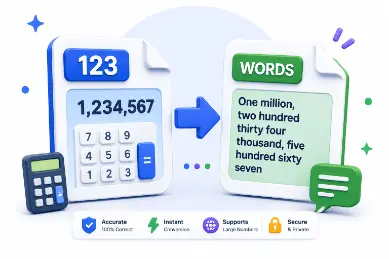
Currency metadata — including singular and plural forms and Arabic case endings — is loaded for the selected currency, then the major amount and the minor unit (cents, halalas, or similar) are spelled out separately before being joined into one sentence. An optional legal-style suffix such as "only" can be appended, matching common invoice and cheque phrasing.
How to use
- Search for the currency and select it from the list.
- Enter the amount, using a dot or comma depending on your locale.
- Toggle the tanween or suffix option if it appears, then copy the finished phrase.
Features
- Broad coverage of ISO 4217 currencies rather than just a handful of common ones.
- Arabic grammatical forms are applied correctly to both the unit and the fractional amount.
- A parallel English phrase is generated alongside the Arabic wording.
Use cases
- Writing the amount line on a cheque.
- Preparing a bilingual purchase order.
- Training staff on the formal wording a finance or legal document expects.
Examples
- SAR 1,234.50 becomes a phrase covering the riyal amount and the halalas together.
- A EUR amount with cents is spelled out the same way, in both languages.
Common mistakes
- Selecting the wrong currency changes the unit name in the resulting phrase, even if the number itself is correct.
- Very large amounts can still wrap across lines; always verify the wording against your bank's stated limits.
FAQ
Does it cover every country’s legal wording?
It follows standard formal patterns rather than every jurisdiction's exact template, so it's worth matching the result to your bank's or notary's required wording.
Why Arabic tanween option?
Some documents prefer accusative tanween at the end of the amount phrase, while others omit it — the toggle covers both conventions.
Conclusion
One accurate figure, two matching sentences — that agreement between digits and words is what a cheque, invoice, or contract actually needs.